What’s Really Driving Conflict on Your Team (And Why Many Leaders Miss It)
Dec 14, 2025

3:10 – The Drama-Free Communication IcebergTM: what leaders focus on; and what they miss
6:45 – The four drivers behind every conflict
10:20 – Why assumptions quietly escalate tension on teams
15:05 – How unexpressed wants and unmet needs create resentment
18:40 – A real OR leadership story: resolving six years of conflict
27:10 – How to start addressing the real issue without making things worse
What’s Really Driving Conflict on Your Team (And Why Many Leaders Miss It)
You’ve been told that if conflict keeps disrupting your team, the solution is better communication, clearer expectations, or another hard conversation.
And sometimes that does help.
But when the same conflict keeps resurfacing despite your best efforts, it is usually because you are trying to solve the wrong problem and focusing on something other than what is actually creating the drama.
Conflict Is Natural. Drama Is Optional.
As humans with different opinions, different needs, and strong emotions, it’s natural that we’re going to have conflict at times, even at work. Especially when you’re in healthcare or another high-stress environment where people are in survival mode all around you.
Patients might be stressed. Their families might be worried. Coworkers may have had a difficult morning or just received bad news. People come into work already braced for crisis.
When that happens, our nervous systems are on edge. We go into fight, flight, freeze, or please, and that short-circuits our ability to think clearly.
If we don’t pause to calm our nervous system and figure out what's really going on, then the conflict that follows is actually our own creation. That’s when drama takes over.
The Drama-Free Communication IcebergTM
(Click the image)
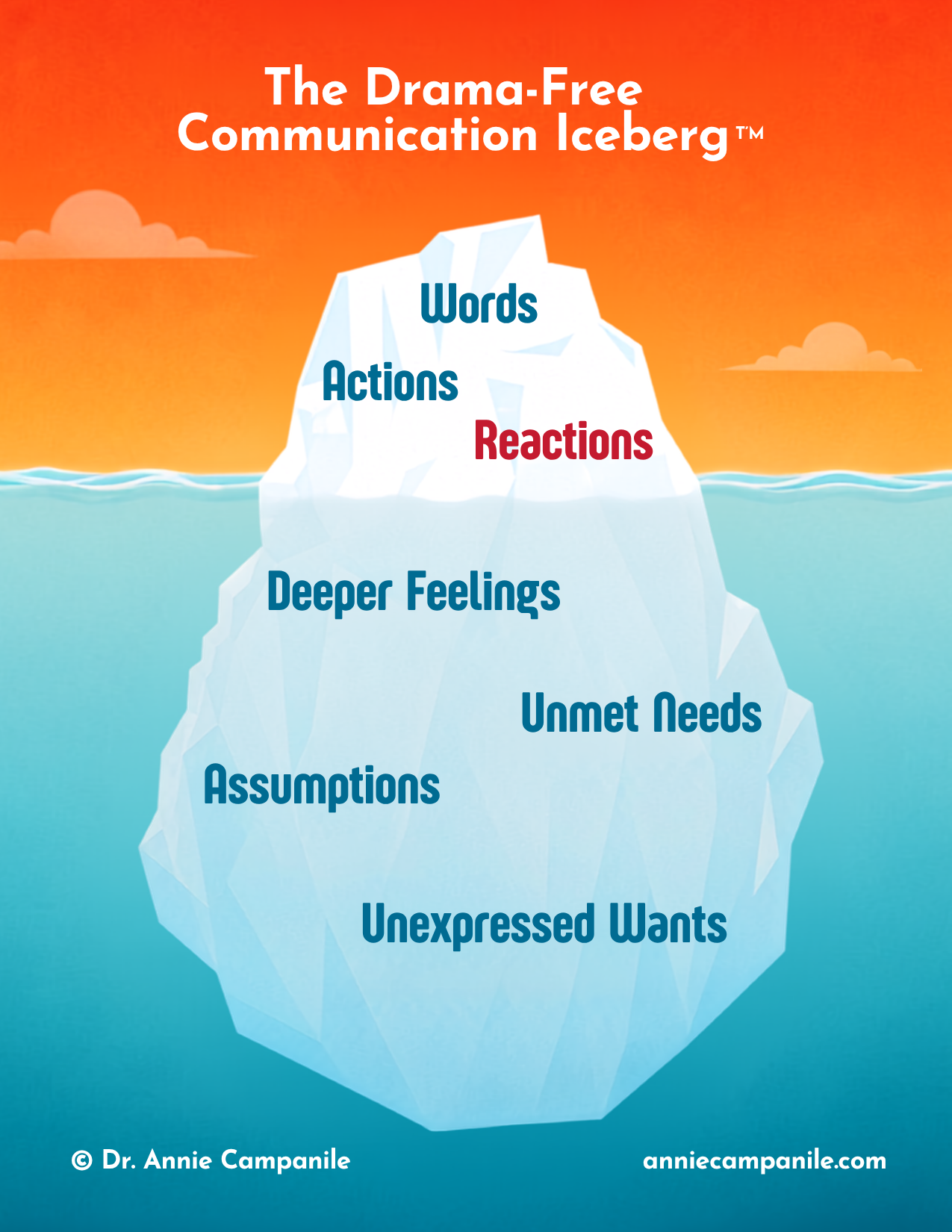
When communication seems hard, it is because we are focusing on what's outside of ourselves.
Either we try to memorize personality types, body language tips and role playing scripts, or we spend hours analyzing our own and other people's words, actions, and reactions, trying to predict what will happen. How exhausting and confusing!
That's why I created The Drama-Free Communication IcebergTM, a very simple tool that can help you quickly figure out:
- What is driving any conflict;
- What is driving your own frustration, fear, anger or discomfort; and
- Where to focus in order to stop the drama and resolve the conflict for good
Here's How The Drama-Free Communication IcebergTM Works
What's above the surface on the Iceberg is obvious and reportable. It's what we usually focus on.
What's below the surface is internal. It's what we usually ignore or take for granted.
- Focus here to identify what's really going on within yourself.
- Think of a situation that's currently bothering you. Take a deep breath, look at the bottom portion of the Drama-Free Communication IcebergTM, ask yourself, "What is this really about for me?" and then pay attention to the first thing that comes to your mind.
- Once you've identified something on your Iceberg, the next very important step is this: Address it.
Many possibilities open up once we take responsibility for exploring our own Icebergs!
Download the Iceberg image and show it to others so they can identify what's going on inside themselves (even if you think you already know what that is 😉).
The Four Hidden Drivers behind All Workplace Drama
After more than 20 years of helping physicians, nurses, leaders and teams in healthcare communicate effectively, there are four things I consistently see beneath the surface of every conflict:
1. Deeper Feelings
These are unresolved emotions from previous experiences, which might have nothing to do with the current situation.
2. Assumptions
Under stress, people instantly make assumptions to keep themselves safe: assumptions about a colleague's motives, what their actions meant, and what they'll do next (expecting it to be negative). Or, depending on what they've been through in the past, people might assume they're to blame for everyone's unhappiness. That's not helpful either (and it's not true! Everyone is responsible for their own happiness).
3. Unexpressed Wants
This becomes a problem when people want something like help, clear expectations, or a break, but they do not say it or they deny it. Sometimes, when help is offered, they reject it and say, “I’ve got it,” and then they grow resentful when they're left doing "all the work" and thinking, "Why doesn't anyone help me?!"
4. Unmet Needs
Unmet needs fuel frustration and tension. Let me be clear: As a leader, you are not responsible for meeting every need of your employees. And it's not even your prerogative. You just can't do it. But you can create an environment where people can meet their own needs and provide support to one another.
A Healthcare Leadership Example: Six Years of Conflict Resolved in 90 Minutes
In this episode, I share a story from an operating room team that had gone through four directors in three years. Their department's culture was aggressive and people were downright mean to each other.
Two experienced and influential nurses refused to work together and for six years, leadership had created workarounds by adjusting schedules and assignments, because no one knew how to resolve the conflict.
When the new director asked for my help and we finally addressed it, the core issue turned out to be two very different assumptions about bedside report.
Each nurse believed they were doing the right thing. Each believed the other was undermining them and trying to make them look bad.
Once the director clarified expectations, the conflict was resolved in one facilitated 90-minute conversation.
Not because the nurses became friends. That wasn't necessary in order for them to communicate professionally and stop generating drama on the team.
The conflict finally resolved because the real driver of the conflict had been identified and addressed.
How to Use the Drama-Free Communication IcebergTM With Your Team
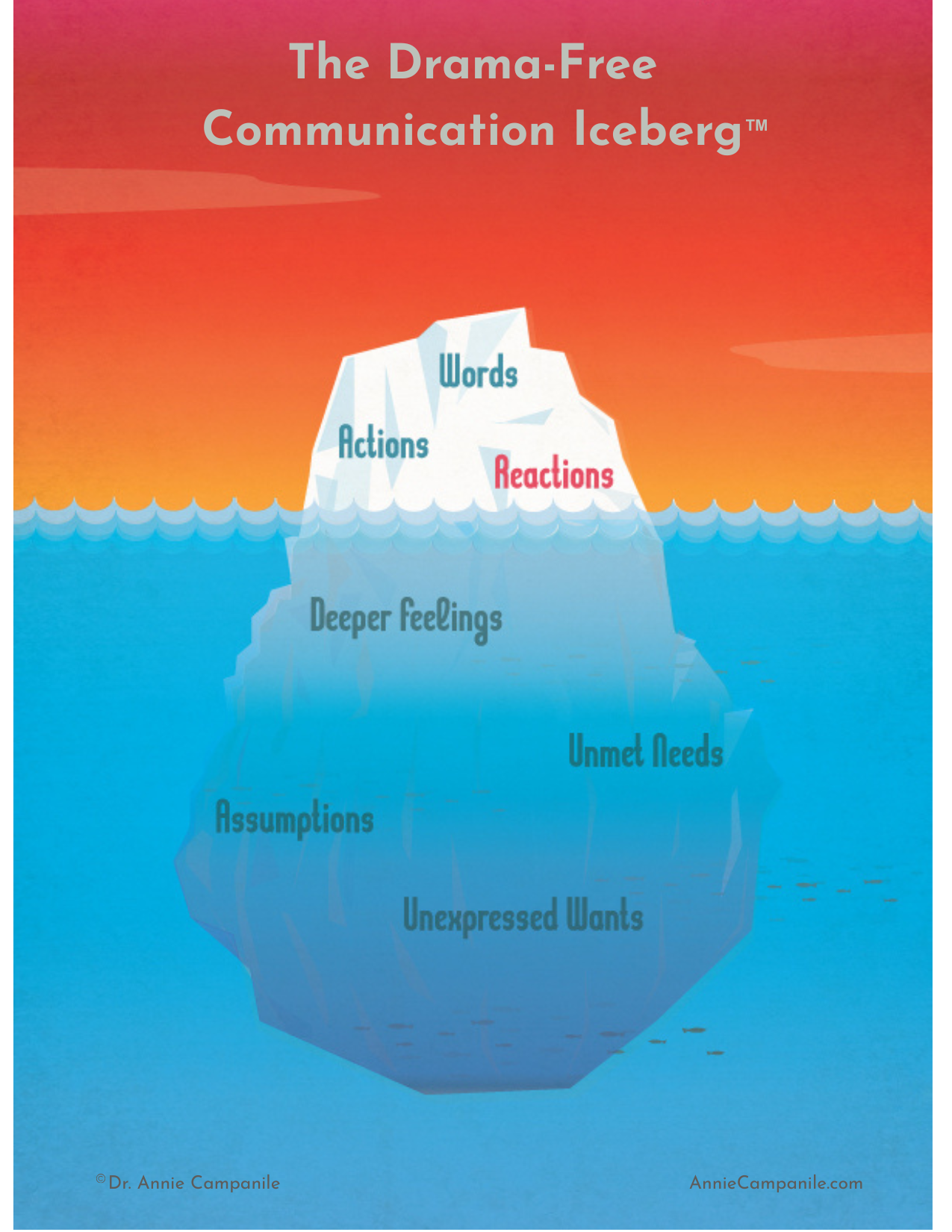
(Save or print the Drama-Free Communication IcebergTM)
-
Start with yourself.
The first step is always to pause, calm your nervous system by giving attention to any of your five senses, and get out of survival mode yourself. Then you'll be able to see what's going on beneath the surface inside yourself and also help others do the same. Remember, as with all behavioral expectations, the leader has to go first. Otherwise, the team won't feel safe enough to let their guards down and explore their own icebergs. -
Use it as a visual prompt.
Simply showing the Iceberg to someone can change the tone of the conversation and generate insights that lead to better conversations.
3. Help people get curious.
Ask questions to...
Reveal and check assumptions
Many of my clients print the Iceberg and keep it near their workspace (or on the break room refrigerator!) as a reminder to slow down after reacting, get out of survival mode, and then get curious. This is trauma-informed leadership in practice.
How to Spot the Real Issue before It Derails Your Team Again
When leaders address only what is visible, conflict continues to grow beneath the surface.
When leaders slow down, calm their own survival responses, and get curious about what is really driving a conflict, drama loses its grip.
That is what this episode walks you through.
🎧 Listen to Episode 29 of Drama Free Teams
If you are navigating high-stakes conflict that isn't getting resolved, I might be able to help. You can learn more about my Executive Coaching program for senior leaders here.
Next episode: a replay of the most listened-to episode of the year on how to "be a bowl, not a sponge," so you can be a compassionate leader without carrying everyone else’s stress home with you.